I am an advocate.
I know, I know... I've only been doing this for a little over two years, a fact that gets pointed out to me a surprising amount, actually. However, the thing with civil rights is this: it doesn't matter how long or how hard you've been advocating, but that you've been doing it. Period. There is always a person or organization that feels that one group is less than another; that is certainly the case when you look at Down syndrome.
When I was a kid in the '70s (back even before "Awareness" was de rigueur), if you were raising funds, you went door to door. You talked, face to face to the people in your community, you handed over petitions for your neighbours to sign. We had to do that once, not for DS (as those children were hidden away then), but for safety. The house I grew up in is located at the top of a hill on a sharp 90 degree turn. Drivers would gun the motor at the bottom and would be going full tilt by the time they reached the crest and then they'd hit the turn. Not surprisingly, as this was in the days before MADD, many people--especially in the winter--would not account for the turn and end up on our front lawn. During one afternoon storm, my brother and I amused ourselves by counting the cars as they came crashing over the curb. There were 19. Every spring our front lawn was a disaster. We would collect the hubcaps and line them up for their owners to retrieve them. What we should have done is nailed them to the fence as a warning, but hindsight is what it is.
My parents took up a neighborhood petition and took the problem in front of the city (then "town") council and got a stop sign put up halfway up the hill. That slowed the drivers down for the most part and we could stop fearing the day that we'd end up with a Buick in our living room. Today it seems very simple, it is an issue of child safety. Then, well, it was a big deal then. No one cared about the two kids living in our house (or the two adults either). Or the other children that came over to play. In fact, there was some push back, as there always is in matters of bureaucracy; I can't quite remember what it was exactly, but one of the Town Councillors felt that traffic control was pointless and the funds for one stop sign would be better spent in Bramalea (a then-growing part of Brampton that he represented). Various arguments were presented, I think just for the sake of creating discussion and justifying salaries. One Regional Councillor argued that it would cost the taxpayers too much in gas to stop and start again. Driver education was also mentioned at various points. But, we stood our ground. Sure, people looked at us a little weird and grumbled as they stopped at the new stop sign. But, we did it and it happened. No cars ended up in our living room, our lawn remained green and my brother and I managed to grow up and make it to adulthood.
Petitions, leaflets, posters, marches, protests, picketers. Those was the vehicles of advocacy that I knew growing up. All very structured and organized and a lot of legwork. Growing up in a trade union family meant I was exposed to that at a tender age as well. I'm also old enough to remember the last dying days of the Vietnam War on the news. I was in university during the Gulf War (Iraq the first) and there were protests everywhere. There were bomb threats called in to the university daily. This was also in the early days of GLAAD, of the inclusion movement. Macedonian students clashed with Greek students. It wasn't a pretty time then either.
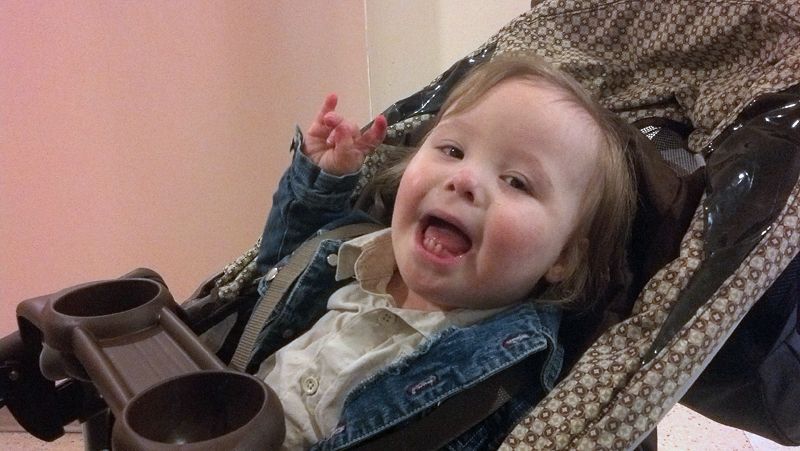
So, it's not that surprising, that me, a union nurse who has now moved to another area of suburbia (not Bramalea) in this now cosmopolitan city, is advocating for something she believes in passionately. My youngest son, one of my twins, has Down syndrome. To myself and Team Logan, it's not that big of a deal. However, it is to a lot of people. There are still a lot of people who see my son as not quite a person. As a freak, devoid of consciousness and meaningful thought, who looks exactly like every other one of his kind. As someone who has no right to be here (and no rights while he is here). As a result, he and those with Down syndrome are marginalized, not only by the general public, but by those that make our laws, those that uphold the law and those that are charged with his physical and mental welfare. Hell, even by some in the greater Down syndrome "community". It's not just his civil rights that I have to strive to protect, but his human rights.
Once I decided to throw my hat into the ring, I looked around at what was to be done. There are a lot of Awareness Campaigns and awareness is a good thing. However, I quickly grew tired of awareness, especially when you had people wearing the T-shirts or the bracelets and calling their friends [the R word], or organizations that claim to advocate, yet really don't do much of anything other than raise funds to pay for the next fundraiser. It was very frustrating, finding myself in a sea of awareness, yet constantly having to explain my son, his medical history, what that means, what that means to us to every Tom, Dick and Harry in the Doctors office, in the grocery store and everywhere else. I did this for the greater good, in the name of Awareness and Education. It was bad enough being (practically) asked for my gynecological history by perfect strangers (in regards to the twins)... but throw in a little chromosomal fun (other than my olive complexion and my husband's gingerness) and all semblance of social limits are thrown right out the bloody window. Different. Other. Unworthy.
I turned to the new frontier of advocacy and activism, the internet. In this, the information age, we all have blogs and Facebook and Twitter. Through social networking, thousands of parents like myself have come together at various nexus points to talk about our kids and what the future holds. Thousands of self-advocates, adults with DS, are doing the same, networking and shaping the world around them. In fact, I had never heard of twins like mine until I found a whole online group of parents of multiples with DS. Instead of a handful of parents in a local community meeting for coffee once a month, thousands upon thousands of parents, advocates and self-advocates have the potential to meet daily. In an instant.
It is all very exciting and terrifying at the same time.
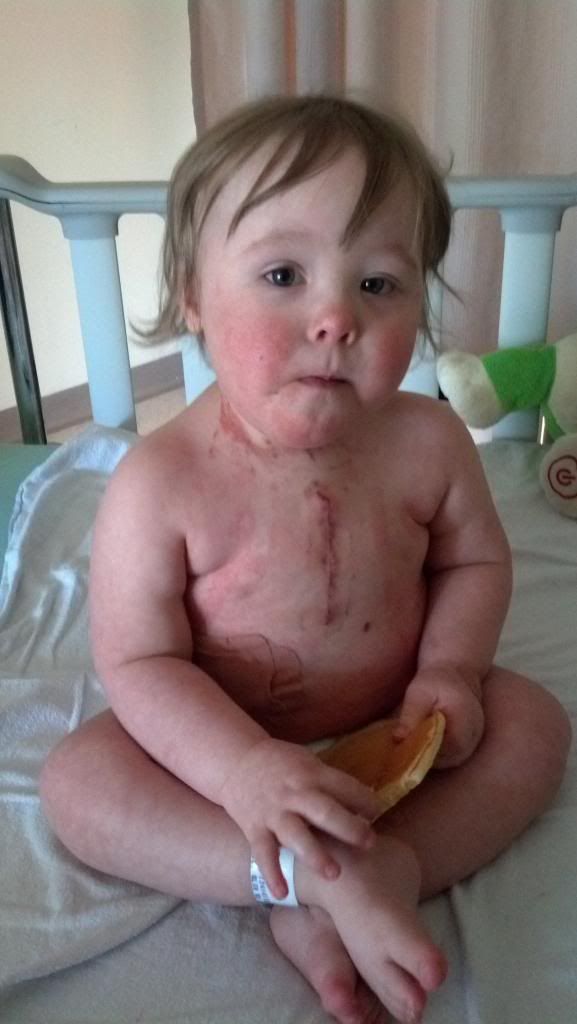
This brand of grassroots advocacy is something that I can do a great deal of, a little at a time. I don't have large blocks of free time with the demands of my family and my shift work job, so I can do a little here and there, any hour of the day or night. Which is awesome, as I get to talk to so many people in so many different time zones. Social media has made our world smaller; advocacy has now gone from local to global. I can spend a few minutes when I can, to share my thoughts and experiences or bolster the spirits of another who is having a hard time. I have been able to help edit publications for Down Syndrome Uprising on the bus in the morning. I've advocated on break at work, setting up my laptop and writing when I can. Instead of reading the paper in the morning (does anyone actually do that any more?), I check the news online. I check Twitter, I check my Facebook account, group and pages (both Down Syndrome Uprising and Down Wit Dat). I have blogged and shared news articles while tandem breastfeeding two babies. I have fielded emails with journalists while at pre-op appointments for my son's heart surgery. I have reached out to countless others from my son's hospital bedside, speaking out against injustice while the morphine dripped in his veins. Even something as monumental as Wyatt's surgery has not stopped me. This life event, this period of my life that was so stressful as a parent, is peanuts compared to the struggles of others. The entire time, I continued to work, cognizant of the fact that not so long ago, Wyatt would not have qualified for this surgery as he had DS; he would not have warranted the medical care that another child would receive without question. Advocacy changed that.
Anyone can do this as well. No longer is advocacy solely in the hands of those that get paid to do it or a select few that have the "right look" or the "right feel". We fight for acceptance of our children, stopping for nothing other than total inclusion. We have our detractors too... we get called "Mommy Bloggers" and because we choose to use a medium that teenagers also use, because we are not paid by larger organizations or mainstream media, we are easily dismissed with one jaded wave.
But, as those groups are figuring out, we are anything but easy to dismiss.
Social media has allowed me to connect with family and connect with friends, new and old all over the world. I'm no longer alone. I'm no longer the one in a million who has fraternal twins, one of which has DS. I'm no longer one in 700 mothers. I am amongst thousands. Advocacy is no longer a "March on Washington" or on Capitol hill in Ottawa. We are marching, daily, as we wait for the coffee to brew or the dryer to finish or yes, even in the stolen time in the bathroom. We do this daily, within seconds. The face of Down syndrome advocacy, much like the community itself, is growing, evolving. No longer are we trying to change our little corner of our community, to "fix" our children or hammer a square peg into a round hole. We are trying to change the world.
One tweet, one post, one comment, one update, one petition, one share, one vote at a time.
I know, I know... I've only been doing this for a little over two years, a fact that gets pointed out to me a surprising amount, actually. However, the thing with civil rights is this: it doesn't matter how long or how hard you've been advocating, but that you've been doing it. Period. There is always a person or organization that feels that one group is less than another; that is certainly the case when you look at Down syndrome.
When I was a kid in the '70s (back even before "Awareness" was de rigueur), if you were raising funds, you went door to door. You talked, face to face to the people in your community, you handed over petitions for your neighbours to sign. We had to do that once, not for DS (as those children were hidden away then), but for safety. The house I grew up in is located at the top of a hill on a sharp 90 degree turn. Drivers would gun the motor at the bottom and would be going full tilt by the time they reached the crest and then they'd hit the turn. Not surprisingly, as this was in the days before MADD, many people--especially in the winter--would not account for the turn and end up on our front lawn. During one afternoon storm, my brother and I amused ourselves by counting the cars as they came crashing over the curb. There were 19. Every spring our front lawn was a disaster. We would collect the hubcaps and line them up for their owners to retrieve them. What we should have done is nailed them to the fence as a warning, but hindsight is what it is.
My parents took up a neighborhood petition and took the problem in front of the city (then "town") council and got a stop sign put up halfway up the hill. That slowed the drivers down for the most part and we could stop fearing the day that we'd end up with a Buick in our living room. Today it seems very simple, it is an issue of child safety. Then, well, it was a big deal then. No one cared about the two kids living in our house (or the two adults either). Or the other children that came over to play. In fact, there was some push back, as there always is in matters of bureaucracy; I can't quite remember what it was exactly, but one of the Town Councillors felt that traffic control was pointless and the funds for one stop sign would be better spent in Bramalea (a then-growing part of Brampton that he represented). Various arguments were presented, I think just for the sake of creating discussion and justifying salaries. One Regional Councillor argued that it would cost the taxpayers too much in gas to stop and start again. Driver education was also mentioned at various points. But, we stood our ground. Sure, people looked at us a little weird and grumbled as they stopped at the new stop sign. But, we did it and it happened. No cars ended up in our living room, our lawn remained green and my brother and I managed to grow up and make it to adulthood.
Petitions, leaflets, posters, marches, protests, picketers. Those was the vehicles of advocacy that I knew growing up. All very structured and organized and a lot of legwork. Growing up in a trade union family meant I was exposed to that at a tender age as well. I'm also old enough to remember the last dying days of the Vietnam War on the news. I was in university during the Gulf War (Iraq the first) and there were protests everywhere. There were bomb threats called in to the university daily. This was also in the early days of GLAAD, of the inclusion movement. Macedonian students clashed with Greek students. It wasn't a pretty time then either.
So, it's not that surprising, that me, a union nurse who has now moved to another area of suburbia (not Bramalea) in this now cosmopolitan city, is advocating for something she believes in passionately. My youngest son, one of my twins, has Down syndrome. To myself and Team Logan, it's not that big of a deal. However, it is to a lot of people. There are still a lot of people who see my son as not quite a person. As a freak, devoid of consciousness and meaningful thought, who looks exactly like every other one of his kind. As someone who has no right to be here (and no rights while he is here). As a result, he and those with Down syndrome are marginalized, not only by the general public, but by those that make our laws, those that uphold the law and those that are charged with his physical and mental welfare. Hell, even by some in the greater Down syndrome "community". It's not just his civil rights that I have to strive to protect, but his human rights.
Once I decided to throw my hat into the ring, I looked around at what was to be done. There are a lot of Awareness Campaigns and awareness is a good thing. However, I quickly grew tired of awareness, especially when you had people wearing the T-shirts or the bracelets and calling their friends [the R word], or organizations that claim to advocate, yet really don't do much of anything other than raise funds to pay for the next fundraiser. It was very frustrating, finding myself in a sea of awareness, yet constantly having to explain my son, his medical history, what that means, what that means to us to every Tom, Dick and Harry in the Doctors office, in the grocery store and everywhere else. I did this for the greater good, in the name of Awareness and Education. It was bad enough being (practically) asked for my gynecological history by perfect strangers (in regards to the twins)... but throw in a little chromosomal fun (other than my olive complexion and my husband's gingerness) and all semblance of social limits are thrown right out the bloody window. Different. Other. Unworthy.
I turned to the new frontier of advocacy and activism, the internet. In this, the information age, we all have blogs and Facebook and Twitter. Through social networking, thousands of parents like myself have come together at various nexus points to talk about our kids and what the future holds. Thousands of self-advocates, adults with DS, are doing the same, networking and shaping the world around them. In fact, I had never heard of twins like mine until I found a whole online group of parents of multiples with DS. Instead of a handful of parents in a local community meeting for coffee once a month, thousands upon thousands of parents, advocates and self-advocates have the potential to meet daily. In an instant.
It is all very exciting and terrifying at the same time.
This brand of grassroots advocacy is something that I can do a great deal of, a little at a time. I don't have large blocks of free time with the demands of my family and my shift work job, so I can do a little here and there, any hour of the day or night. Which is awesome, as I get to talk to so many people in so many different time zones. Social media has made our world smaller; advocacy has now gone from local to global. I can spend a few minutes when I can, to share my thoughts and experiences or bolster the spirits of another who is having a hard time. I have been able to help edit publications for Down Syndrome Uprising on the bus in the morning. I've advocated on break at work, setting up my laptop and writing when I can. Instead of reading the paper in the morning (does anyone actually do that any more?), I check the news online. I check Twitter, I check my Facebook account, group and pages (both Down Syndrome Uprising and Down Wit Dat). I have blogged and shared news articles while tandem breastfeeding two babies. I have fielded emails with journalists while at pre-op appointments for my son's heart surgery. I have reached out to countless others from my son's hospital bedside, speaking out against injustice while the morphine dripped in his veins. Even something as monumental as Wyatt's surgery has not stopped me. This life event, this period of my life that was so stressful as a parent, is peanuts compared to the struggles of others. The entire time, I continued to work, cognizant of the fact that not so long ago, Wyatt would not have qualified for this surgery as he had DS; he would not have warranted the medical care that another child would receive without question. Advocacy changed that.
Anyone can do this as well. No longer is advocacy solely in the hands of those that get paid to do it or a select few that have the "right look" or the "right feel". We fight for acceptance of our children, stopping for nothing other than total inclusion. We have our detractors too... we get called "Mommy Bloggers" and because we choose to use a medium that teenagers also use, because we are not paid by larger organizations or mainstream media, we are easily dismissed with one jaded wave.
But, as those groups are figuring out, we are anything but easy to dismiss.
Social media has allowed me to connect with family and connect with friends, new and old all over the world. I'm no longer alone. I'm no longer the one in a million who has fraternal twins, one of which has DS. I'm no longer one in 700 mothers. I am amongst thousands. Advocacy is no longer a "March on Washington" or on Capitol hill in Ottawa. We are marching, daily, as we wait for the coffee to brew or the dryer to finish or yes, even in the stolen time in the bathroom. We do this daily, within seconds. The face of Down syndrome advocacy, much like the community itself, is growing, evolving. No longer are we trying to change our little corner of our community, to "fix" our children or hammer a square peg into a round hole. We are trying to change the world.
One tweet, one post, one comment, one update, one petition, one share, one vote at a time.